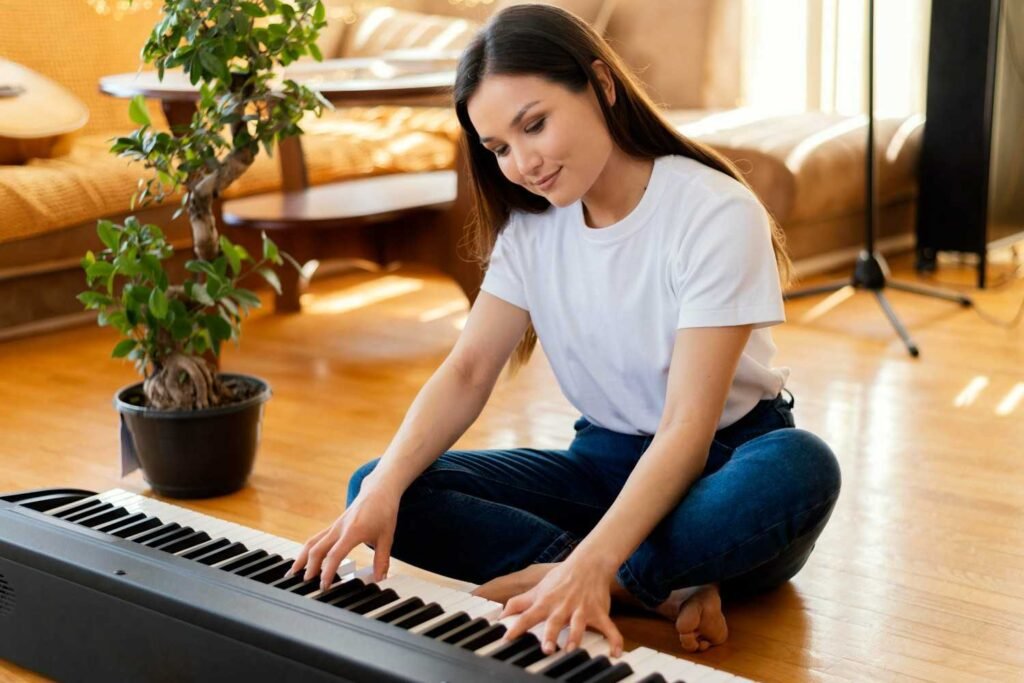
A piano can feel like a full music school packed into one instrument, but the first step is much simpler than it looks. You do not need to understand every note, chord, scale, or rhythm on day one. You only need a comfortable setup, a beginner-friendly lesson path, and a short routine that keeps your hands moving every day.
That is why how to learn piano at home is less about talent and more about building the right system from the start.
I like home learning because it removes the pressure many beginners feel in a formal lesson room. You can pause a video, repeat a tricky section, practice with headphones, and spend ten minutes on the same four bars until they finally sound right. For busy beginners in the US, that flexibility can turn piano from a distant dream into a daily habit that actually sticks.
Can You Really Learn Piano at Home Without a Teacher?
Yes, you can learn piano at home without a teacher, especially as a beginner. A teacher can correct technique faster, but modern digital tools make self-learning much easier than it used to be. Interactive piano apps, structured video lessons, online piano courses, and beginner keyboards now give students a practical way to start playing from their own living room.
That said, I would not treat home learning as a shortcut around fundamentals. You still need posture, rhythm, finger control, and steady repetition. The difference is that you can learn those skills through a more flexible system.
Instead of sitting through tedious traditional drills for months, you can use short exercises and simple songs to build the same foundation while staying motivated.
What Keyboard Do You Need to Start Learning Piano?
Your home setup matters because it affects how your hands develop. If your budget allows, choose a digital piano or keyboard with 88 fully weighted keys, touch sensitivity, and a sustain pedal. Weighted keys give your fingers resistance that feels closer to an acoustic piano, while a sustain pedal helps you learn expression and smoother sound.
A 61-key keyboard can still work for early beginner piano lessons at home, especially if you are testing your interest or buying for a child. However, an 88-key digital piano gives you more room to grow. Add a stable bench or chair, headphones for quiet practice, and a metronome app. You do not need a fancy music room. A clean, comfortable corner with good lighting can become your daily practice space.
How Should You Sit at the Piano?
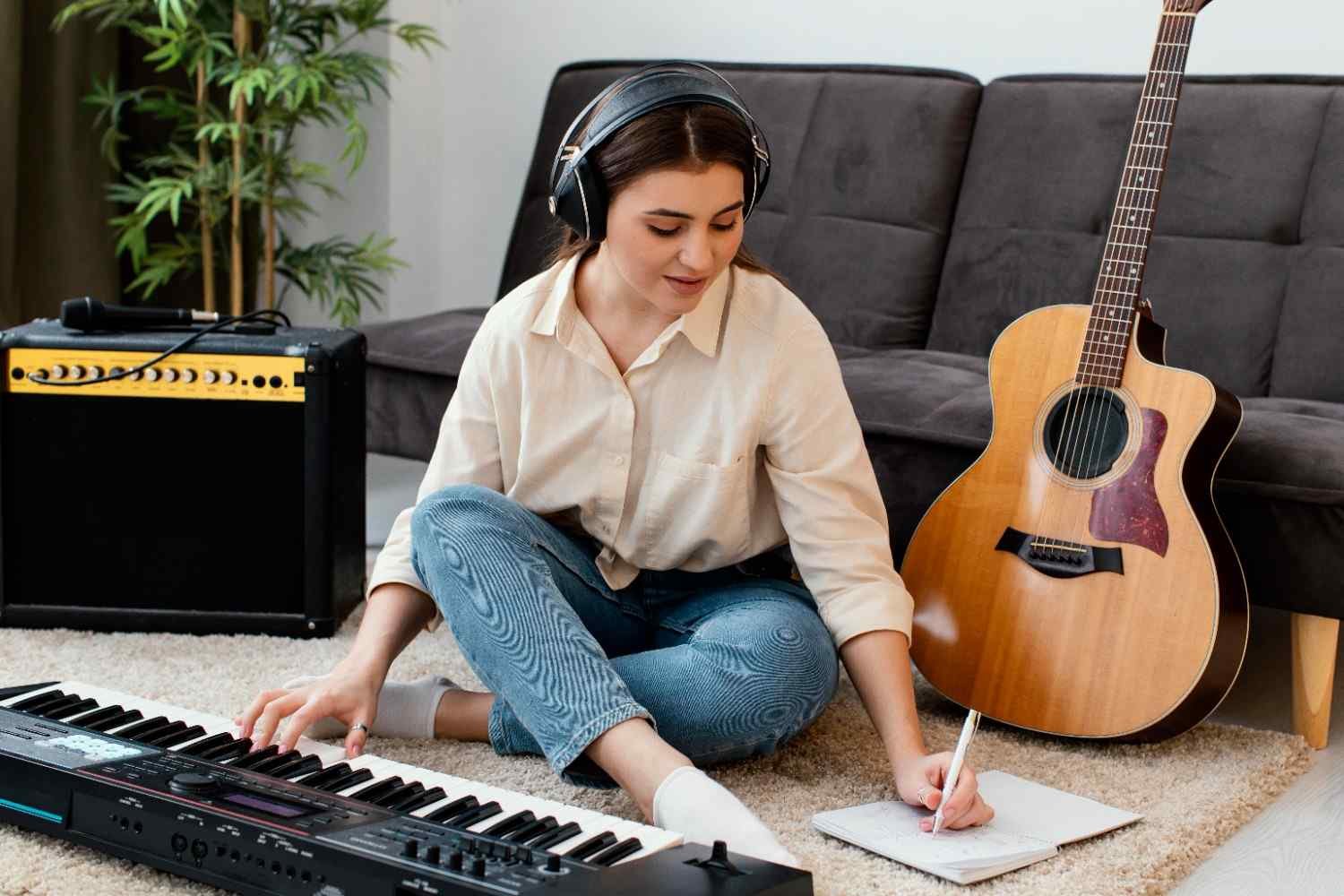
Good posture helps you play longer and avoid tension. Sit near the middle of the keyboard with your feet flat on the floor. Keep your elbows bent at a comfortable angle and your shoulders relaxed. Your wrists should stay level, not collapse downward or lift too high.
Curve your fingers like you are holding a tennis ball. This small detail matters because flat fingers make it harder to control notes, chords, and speed. If you are serious about learning piano or exploring how to start a music career, I always recommend fixing posture before chasing harder songs. Bad habits feel harmless at first, but they can slow your progress later.
How Do You Learn Keyboard Geometry First?
Before you play full songs, learn the keyboard geometry. Piano keys follow a repeating visual pattern, and once you understand that pattern, the instrument feels far less confusing.
Look at the black keys. They appear in groups of two and three. Find the group of two black keys nearest the center of the keyboard. Middle C is the white key directly to the left of that two-black-key group. Once you can find Middle C, you can start locating other notes more easily.
The white keys follow the musical alphabet: A, B, C, D, E, F, and G. After G, the pattern starts again at A. Practice saying the note names as you play them. This simple habit helps you connect your fingers, eyes, and ears.
What Is the Best Digital Learning Method for Beginners?
The best way to learn piano at home is to use one main learning method and one support method. Too many apps and videos can confuse you. Pick a structured path and follow it long enough to see progress.
Interactive apps such as Flowkey can listen through a microphone or MIDI connection and give feedback as you play. This can help beginners spot wrong notes and practice songs at a slower pace. Video-based platforms such as Pianote can help you follow real teachers, learn chords, and understand modern playing styles.
Hoffman Academy can also be useful for beginners and families because it offers a large library of free structured piano lessons.
YouTube can help, but I would use it carefully. It works best for extra song tutorials, not as your only learning plan. A beginner needs sequence, not random videos.
How Should Beginners Practice Piano Every Day?
A simple 20-minute routine can do more than an unfocused one-hour session. I like this structure because it keeps practice realistic for busy adults, students, and parents.
Start with three minutes of warm-up. Play a five-finger scale such as C, D, E, F, and G slowly up and down. You can also play simple broken chords to wake up your fingers.
Use the next seven minutes for technique. Practice one hand at a time, play a major scale, or repeat a chord change until it feels smooth. This trains muscle memory and control.
Spend the final ten minutes on a song section. Do not try to play the entire piece from start to finish every time. Focus on four bars of a song you love. Repeat them slowly until your hands understand the movement. This method helps you start playing recognizable melodies within your first week without ignoring fundamentals.
Should You Learn Chords or Sheet Music First?
Both matter, but your starting point depends on your goal. If you want to play pop songs, worship music, country songs, or simple accompaniment, beginner piano chords can help you sound musical quickly. Start with C major, G major, F major, A minor, and E minor. These chords appear in many familiar songs.
If you want to play classical music, read arrangements, or build long-term musicianship, learning how to read piano notes is important. Sheet music teaches rhythm, timing, and note placement. My preferred method is to learn both slowly. Use chords to enjoy songs early, and add sheet music step by step so your foundation stays strong.
What Should Your First 30 Days Look Like?
In the first week, focus on Middle C, finger numbers, posture, and simple right-hand melodies. Your goal is comfort, not speed.
In the second week, add left-hand notes and basic rhythm. Count out loud and use a metronome. Playing both hands together may feel awkward, but that is normal.
In the third week, practice easy piano chords for beginners. Move slowly between C, G, F, and A minor. Listen for a clean sound instead of rushing.
In the fourth week, combine melody, chords, and rhythm. Choose one easy song and practice a small section daily. Record yourself at the end of the week so you can hear your improvement.
How Long Does It Take to Learn Piano at Home?
Most beginners can play a simple melody in the first week. Many can learn basic chords within the first month. With steady practice, you may play beginner songs with both hands in three to six months.
Real confidence takes longer. Hand independence, rhythm control, chord movement, and note reading improve over time. The goal is not to become advanced overnight. The goal is to build a practice habit that keeps you improving.
What Mistakes Slow Down Beginner Piano Learners?
The biggest mistake is practicing too fast. Slow practice builds accuracy. Another common mistake is ignoring rhythm. Notes matter, but timing makes music sound complete.
Some beginners also skip posture, avoid the left hand, or only use falling-note videos without learning real note names or a simple chord progression. These shortcuts can help you copy a song, but they may not teach you how music works. If you want lasting progress, build the basics while learning songs you enjoy.
Frequently Asked Questions (FAQs)
1. What is the easiest way to start learning piano at home?
The easiest way is to learn Middle C, practice five-finger patterns, use structured online lessons, and follow a short daily routine.
2. Can adults learn piano at home?
Yes, adults can learn piano at home successfully with consistent practice, beginner-friendly lessons, and realistic goals.
3. Is a 61-key keyboard enough for beginners?
A 61-key keyboard works for basic beginner practice, but an 88-key weighted digital piano is better for long-term progress.
4. How many minutes should I practice piano every day?
Most beginners can make strong progress with 20 to 30 minutes of focused daily practice.
Final Thoughts
When I think about how to learn piano at home, I see it as a skill anyone can start with the right structure. You do not need a perfect studio, an expensive acoustic piano, or years of theory before you enjoy music. You need a reliable keyboard, good posture, a smart online learning method, and a daily routine you can actually repeat.
Start small. Learn the keyboard geometry, find Middle C, build finger control, practice simple chords, and focus on short song sections. If you stay consistent, how to learn piano at home becomes less of a mystery and more of a practical step-by-step journey.